Welding Fumes
Welding Fumes are Unbreathable 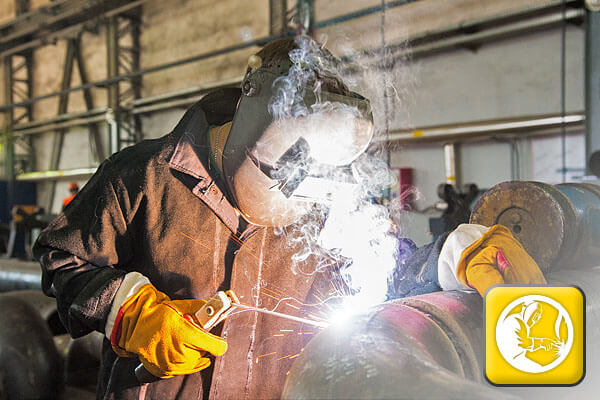
These fumes are created when hot metal vapours cool and condense into very small particles suspended in the air. Generally, these fumes appear as smoke, but are not necessarily visible or lack a detectable odor.
Health Risks
Many health risks are associated with welding gases and fumes, and are primarily determined by:
- the length of time that you are exposed to them
- the type of welding you do
- the work environment
- the protection used
- and the effectiveness of the protection used
How Can I Protect Myself?
Effective Ventilation
Every experienced welder knows that the most efficient method to control weld fumes is to capture them at-source. Drawing the gasses and fumes into a fume extractor or downdraft table prevents hazardous fumes from reaching the operator's breathing zone and contaminating the ambient environment. Most welding applications can and should take advantage of capture-at-source ventilation, and only when impractical should ambient air cleaning solutions be considered.
There is more to effective ventilation than equipment selection. Fume extractors and downdraft tables only work if:
- Operators are trained on safe use and capture zones
- Filters are clean and serviced regularly
- Filter type is correct for the materials being worked on
- Face velocity is sufficient to draw the smoke and fumes created by the application
Know the Application and Evaluate Your Safety Needs
Your fume capture equipment, filtration type, and supplementary personal protection equipment will depend on the type of materials you are working on and dozens of work-situation variables. For example, if you are welding stainless steel, you risk exposure to Hexavalent Chromium - a highly toxic and carcinogenic compound that requires additional precautions.
Evaluate your work situation critically. Ask yourself:
- Are you in a confined space with little or no ventilation?
- What type of metals are you welding?
- Are the work pieces clean, coated, painted or covered with a film of degreasing solvent?
- Is my fume extractor working properly?
- Are there any prevailing air streams I can take advantage of?
- Do I need to wear a respirator?